CHEXX Payments in Kenya
CHEXX uses a crypto-only cashier with 11 supported assets across 9 networks. M-Pesa and KES are not listed as CHEXX deposit or withdrawal methods. For Kenyan players accustomed to mobile-money funding and local-currency balances, that is the main practical difference to consider before depositing.
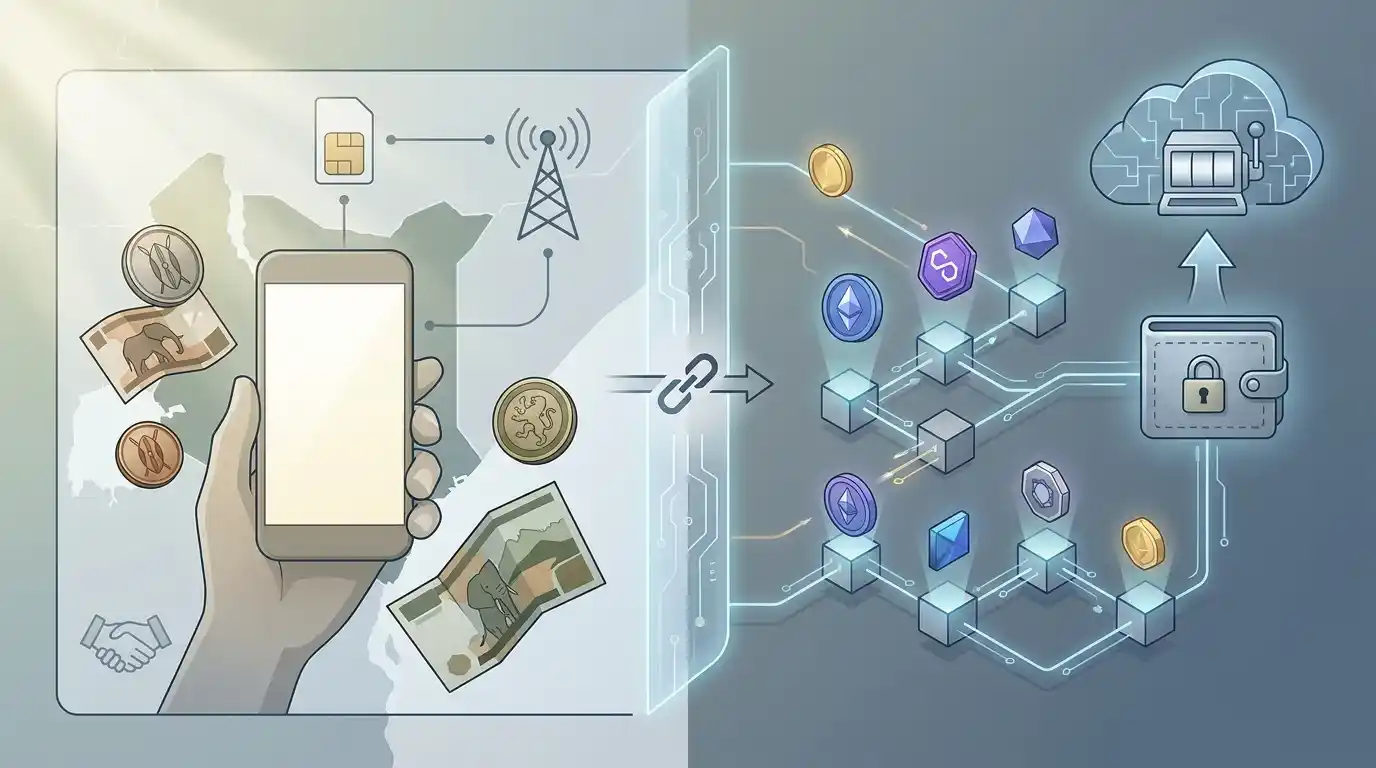
CHEXX payment methods and network support
| Question | CHEXX answer | What it means in Kenya |
|---|---|---|
| Cashier model | Crypto-only | CHEXX does not list KES or mobile money as cashier options |
| Supported assets | 11 crypto assets | You need a supported crypto asset rather than a KES account balance |
| Supported networks | 9 networks | Network selection matters as well as asset selection |
| USDT minimum example | 5 USDT on five major supported networks | The minimum is stated in USDT, not converted into KES |
| CHEXX deposit-acceptance fee | No CHEXX fee | External blockchain or wallet fees can still apply |
The key point is that CHEXX is not a mobile-money-first casino cashier. A Kenyan user may be accustomed to services that foreground M-Pesa or local-currency balances, but this platform starts from cryptocurrency and blockchain network selection instead.
11 supported crypto assets
CHEXX supports 11 crypto assets:
- USDT
- USDC
- SOL
- ETH
- BNB
- TRX
- GRAM
- POL
- BTC
- LTC
- TRUMP
CHEXX supports 11 settlement assets for funding: USDT, USDC, SOL, ETH, BNB, TRX, GRAM, POL, BTC, LTC and TRUMP. KES is not one of those assets and is not a CHEXX cashier currency.
9 supported networks
The CHEXX network set contains nine entries:
| Network group | CHEXX support |
|---|---|
| ERC-20, BEP-20, TRC-20, Polygon, TON | USDT supported with a 5 USDT minimum deposit |
| Bitcoin, Solana, Litecoin, TRUMP | Supported networks for their listed crypto assets |
For USDT, CHEXX lists a 5 USDT minimum on ERC-20, BEP-20, TRC-20, Polygon and TON. The crypto deposits lists the other supported asset-network combinations and their published minimums.
Why network selection matters
Crypto deposits have two moving parts: the asset and the network. Choosing USDT, for example, does not by itself identify the blockchain route because CHEXX supports USDT on several networks. The 5 USDT minimum applies to USDT on ERC-20, BEP-20, TRC-20, Polygon and TON.
Treat the coin and network as a pair. CHEXX can support the same asset on several networks, so the blockchain route matters as much as the ticker. External wallet and exchange instructions depend on the third-party service you use, not on CHEXX itself.
CHEXX does not charge a fee for accepting deposits
CHEXX does not charge a fee for accepting deposits. Blockchain networks, exchanges or external wallet services can still charge transaction fees of their own.
M-Pesa is Kenya context, not a CHEXX cashier method
Mobile money is deeply integrated into everyday economic activity in Kenya. CHEXX takes a different approach: its cashier uses cryptocurrency rather than M-Pesa or a KES balance.
CHEXX does not list M-Pesa as a deposit or withdrawal method. KES is also not listed as a CHEXX cashier currency; it is used here only for Kenya-specific monetary context.
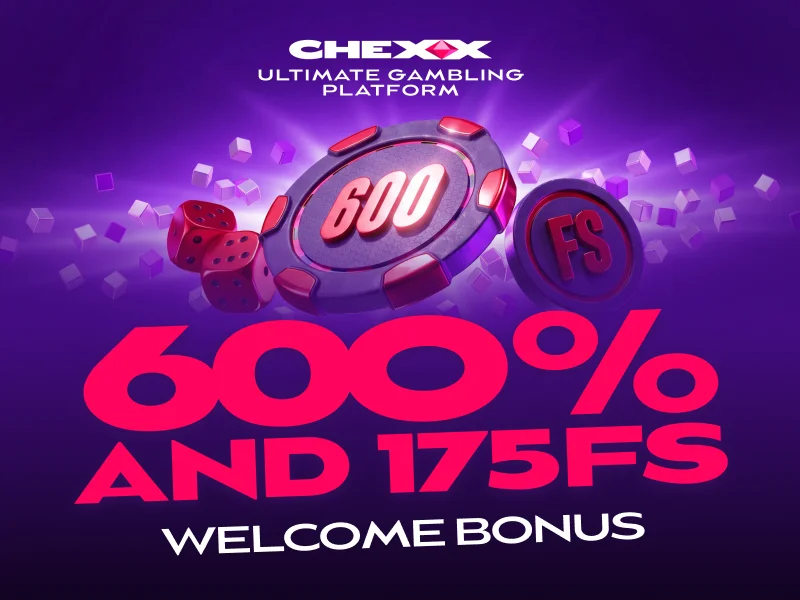
What M-Pesa users should know
A Kenya-based user who wants a direct KES or mobile-money gambling wallet will not find that model at CHEXX. Players already comfortable with the supported crypto assets and networks will find the cashier more familiar.
Third-party fiat-to-crypto services are outside CHEXX
Any M-Pesa-to-crypto or KES-to-crypto route would rely on a third-party exchange or wallet with its own availability, fees, identity checks and legal obligations. M-Pesa and KES-to-crypto services are not CHEXX cashier methods.
CHEXX lists the crypto assets and networks accepted by its cashier. It does not control which external service a Kenyan user might use to obtain those assets.
Kenya’s 5% excise on betting and gaming wallet deposits
Kenya’s current excise framework applies 5% to amounts deposited into customer betting or gaming wallets. The Finance Act 2025 changed the basis to wallet deposits, and the statutory definition refers to a customer wallet maintained by a licensed betting and gaming operator. The relevant primary legislation is available through Kenya Law.
Kenya’s 5% excise applies to amounts deposited into customer betting or gaming wallets under the statutory framework. CHEXX separately states that it does not charge a fee for accepting deposits.
Deposit and withdrawal details differ
Deposits and withdrawals can use different minimums and conditions. Check CHEXX withdrawals before assuming a deposit minimum or network rule also applies to cashouts.
How CHEXX differs from common Kenyan payment habits
Local expectation
Mobile money and KES-centred comparisons are common in Kenya.
CHEXX model
Crypto-only funding with 11 assets and 9 networks.
Local currency support
KES is not one of the CHEXX settlement assets.
Mobile money
M-Pesa is not presented as a CHEXX cashier method.
Stablecoin entry point
USDT has a 5 USDT minimum on ERC-20, BEP-20, TRC-20, Polygon and TON.
Players who expect an M-Pesa-first cashier may find CHEXX inconvenient. Players already using crypto may find its blockchain-based cashier more familiar than a local fiat wallet.
Before funding a CHEXX account
- Confirm that crypto-only funding suits you. CHEXX does not list KES or M-Pesa as cashier methods.
- Choose both asset and network. A ticker alone is not enough when an asset can exist on several chains.
- Check the minimum for the exact route. USDT has a 5 USDT minimum on ERC-20, BEP-20, TRC-20, Polygon and TON.
- Account for external wallet or blockchain fees separately from CHEXX, which states that it does not charge a fee for accepting deposits.
- Check withdrawal conditions independently; deposit minimums do not define cashout rules.
- A deposit-triggered bonus does not add KES or M-Pesa support to the cashier. See CHEXX bonuses for promotional conditions.
Mobile access does not change the cashier model
CHEXX supports browser and PWA access on phones, but the cashier remains crypto-only. See CHEXX mobile access for PWA and Telegram options.
In Kenya, the word “mobile” can easily suggest mobile money. At CHEXX, mobile access describes how you reach the site; the cashier remains crypto-only.
Frequently asked questions
Does CHEXX support M-Pesa in Kenya?
CHEXX is crypto-only and does not list M-Pesa as a deposit or withdrawal method. M-Pesa is not listed as a CHEXX cashier option.
Can I deposit KES at CHEXX?
KES is not one of the 11 CHEXX settlement assets. The cashier is described as crypto-only.
Which cryptocurrencies does CHEXX support?
USDT, USDC, SOL, ETH, BNB, TRX, GRAM, POL, BTC, LTC and TRUMP.
How many crypto networks are supported?
CHEXX supports nine networks: ERC-20, BEP-20, TRC-20, Polygon, TON, Bitcoin, Solana, Litecoin and TRUMP.

What is the minimum USDT deposit?
The minimum is 5 USDT on ERC-20, BEP-20, TRC-20, Polygon and TON.
Does CHEXX charge a deposit fee?
CHEXX does not charge a fee for accepting deposits. External blockchain or wallet costs are a separate matter.
Why the cashier model matters more than the asset count
Eleven supported crypto assets and nine canonical networks provide breadth inside a crypto cashier, but they do not turn CHEXX into a locally denominated payment service. For a Kenya-based user, the important distinction is between network choice and local payment choice. CHEXX can offer several crypto routes while still not offering M-Pesa or a KES balance as a direct cashier method.
The canonical 5 USDT minimum on the major stablecoin networks gives one concrete reference point for deposits. CHEXX also records no fee for accepting deposits and no maximum deposit limits. Those platform facts should be kept separate from any costs that can arise outside CHEXX, such as network or third-party service costs, because the plan does not state that external costs are zero.
Choosing an asset and a network are separate decisions
A supported asset name alone is not enough to describe a deposit route. The network has to be one of the combinations supported for that asset. This is particularly important for stablecoins, which can exist on several networks. The crypto child page owns the detailed asset-to-network matrix, while the payments overview should make the operational rule clear: verify both the asset and the network before treating a route as supported.
The same separation helps with Kenya tax context. Kenya’s statutory treatment can be explained as jurisdiction-level information, but it should not be rewritten as a claim that CHEXX itself performs a particular tax collection or remittance action unless that operator behavior is directly verified. Product facts and Kenya rules remain different evidence layers throughout the cashier discussion.
What the payments overview does not promise
The verified deposit facts do not establish M-Pesa support, a KES balance, zero external blockchain costs or a universal withdrawal schedule. Those details either contradict the crypto-only model or belong to a different evidence layer. Keeping them out of the overview makes the 11-asset and nine-network structure easier to interpret.
The page also avoids recommending a specific exchange or fiat on-ramp. Such a recommendation would introduce a third-party service not covered by the CHEXX payment facts. The editorial boundary is therefore the CHEXX cashier itself: supported crypto, supported networks, known deposit conditions and the Kenya mobile-money expectation gap.
When a crypto-only cashier is practical
CHEXX uses a crypto-only cashier rather than a KES or M-Pesa wallet. It supports 11 crypto assets across 9 networks, including a 5 USDT minimum for USDT on ERC-20, BEP-20, TRC-20, Polygon and TON. CHEXX states that it does not charge a fee for accepting deposits. Kenya’s 5% wallet-deposit excise is a statutory rule rather than a CHEXX deposit fee. For payout conditions, see CHEXX withdrawals; for asset-network combinations, see CHEXX crypto deposits.
For a wider view of CHEXX in Kenya, return to the CHEXX overview.
For operator licensing details, see CHEXX licence.
 Hot Hot BalloonsArmadillo Studios
 Mystic Fortune DeluxeHabanero
 The Book of AmaterasuMascot Gaming
 A Fistful of CoinsZeus Play
 Sugar LandFelix Gaming
 Love Gems Hold and Win1spin4win
 Sweet BonbonellaSwintt
 Sugar RushPragmatic Play
 Gates of OlympusPragmatic Play
 Trojan KingdomJust For The Win
 Maneki FortunesSkywind Group
 Fuzzy WuzzyPoggiPlay
 Rich WorldAmusnet
 Beef Up the Bonus Power ComboHigh Limit Studio
 American BlackjackClassic
 Atlantic City BlackjackClassic
 European BlackjackMultihand
 Premier Blackjack with Side BetsSide Bet
 Quantum Blackjack PlusMultiplier
 Double Exposure BlackjackDouble Exposure
 Blackjack Lucky LadiesSide Bet
 Ultimate Blackjack with RachaelLive-style
 Single Deck Blackjack GoldSingle Deck
 Turbo BlackjackFast-play
 Perfect Pairs BlackjackSide Bet
 VIP American BlackjackVIP
 Classic BlackjackClassic
 Blackjack Surrender OriginsSurrender
 Vegas Downtown Blackjack GoldGold Series
 Lucky RouletteClassic
 Multifire RouletteMultiplier
 Quantum RouletteMultiplier
 French RouletteNetEnt
 Mini Roulette 3DMini
 RouletteRelax Gaming
 Monopoly Roulette TycoonThemed
 Mega Fire Blaze RouletteMultiplier
 European RouletteClassic
 Gold RouletteGold Series
 Roca Riches RouletteThemed
 Immortal Romance RouletteThemed
 American RouletteClassic
 Dragon RouletteThemed
Published by the Chexx Casino team.